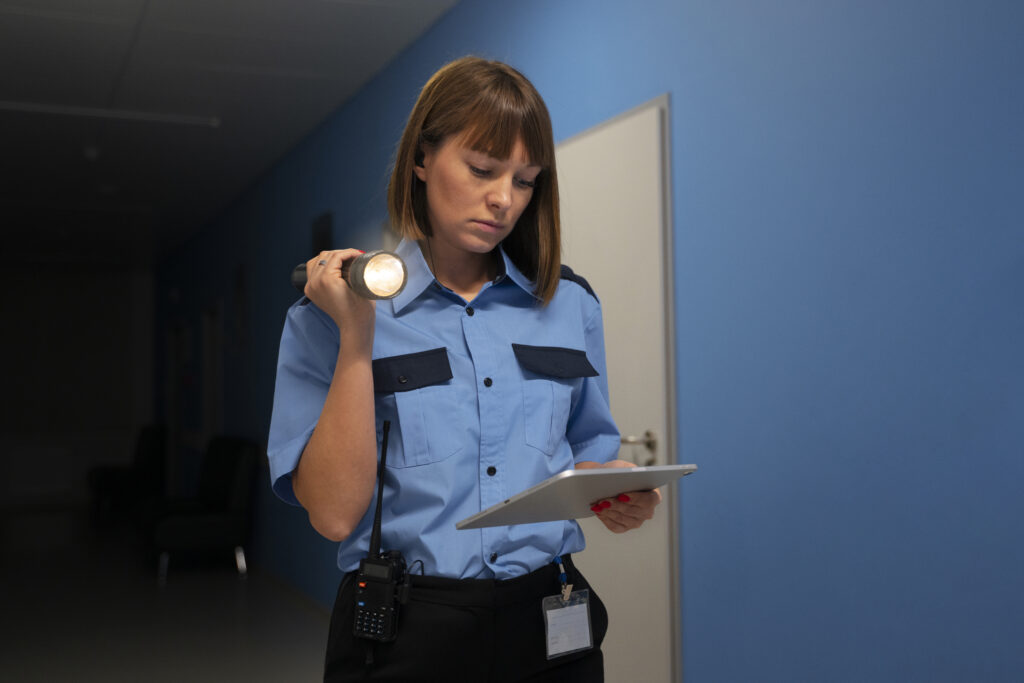


Hotels welcome guests from different backgrounds, including business travellers, families, tourists, and individuals attending private events. Therefore, maintaining a safe environment requires more than monitoring entrances and responding to incidents. Hotel security teams must also respect guest privacy, protect confidential information, and ensure that security procedures do not interfere unnecessarily with the guest experience.
At the same time, hotels face several security challenges. For example, unauthorized visitors may attempt to access guest floors, unattended belongings may raise concerns, and disputes can develop in public areas. Consequently, security personnel need clear procedures that balance effective protection with respectful treatment.
A well-planned hotel security operation focuses on prevention, observation, communication, and appropriate intervention. By following these principles, security teams can help hotels maintain a welcoming atmosphere while protecting guests, employees, and property.
Understanding the Balance Between Guest Privacy and Hotel Security
Guest privacy and physical security are closely connected. While hotels must protect people and property, they should also ensure that guests can move around the premises without unnecessary interference.
For instance, a guest may expect privacy while entering a room, attending a meeting, or spending time with family. However, the hotel must still prevent unauthorized individuals from entering restricted areas.
Therefore, security teams should follow clearly defined procedures that explain when observation, questioning, or intervention is appropriate. Rather than treating every unfamiliar person as a potential threat, guards should consider the circumstances, the person’s behaviour, and the hotel’s access policies.
Moreover, staff should understand the difference between routine security monitoring and intrusive behaviour. Effective hotel security practices should address identifiable risks instead of creating unnecessary discomfort for guests.
Managing Access to Guest Floors and Restricted Areas
One of the most important responsibilities of hotel security personnel is helping control access to areas intended only for registered guests or authorized employees.
Although hotel lobbies are generally accessible to visitors, guest corridors, staff rooms, storage areas, and service entrances may require additional controls. Consequently, security teams need to understand which areas are public and which require authorization.
Effective access management can include the following measures:
- Monitoring entry points: Guards should observe main entrances, side doors, and other access points according to the hotel’s security plan.
- Checking authorization appropriately: When someone attempts to enter a restricted area, personnel should follow established verification procedures without requesting unnecessary personal information.
- Monitoring unusual activity: Repeated attempts to enter guest floors without a clear reason may warrant further attention.
- Coordinating with reception: When a visitor’s authorization is unclear, guards should contact the appropriate hotel employee rather than make assumptions.
- Securing staff-only areas: Service corridors, equipment rooms, and administrative offices should remain accessible only to authorized individuals.
In addition, hotels should establish a consistent approach to visitors meeting registered guests. For example, a visitor may need to register at reception or obtain confirmation before accessing a particular floor.
However, these procedures should be applied respectfully. Security personnel should avoid announcing room numbers in public or discussing a guest’s identity and movements where other people can overhear.
Protecting Guest Information During Security Checks
Hotel security operations can involve information about visitors, incidents, access permissions, and lost property. Therefore, personnel must handle such information carefully.
A guest’s room number, travel schedule, contact details, and identity documents should not be shared casually. Even seemingly harmless information may create a security risk when disclosed to an unauthorized person.
For this reason, hotel security teams should follow established information-handling procedures.
Important practices include:
- Keeping visitor registers and incident records accessible only to authorized personnel.
- Avoiding conversations about guests in public areas.
- Sharing information with hotel management or emergency responders only when there is an appropriate operational reason.
- Following the hotel’s procedures for recording and reporting incidents.
- Protecting written records and electronic information from unauthorized access.
- Referring requests for confidential guest information to the designated hotel representative.
Furthermore, security guards should not promise absolute confidentiality when an incident requires escalation. Instead, they should explain the situation appropriately and follow hotel policy and applicable law.
For example, if a visitor asks whether a particular person is staying at the hotel, security personnel should not confirm the guest’s presence without proper authorization. Instead, they can direct the visitor to reception, where the hotel’s privacy procedures can be followed.
Using CCTV Responsibly in Hotel Premises
Closed-circuit television systems can help hotel management monitor entrances, parking areas, corridors, and other designated locations. Nevertheless, their effectiveness depends on responsible use.
CCTV should support legitimate security objectives rather than become a means of unnecessary surveillance. Therefore, hotels should establish clear rules concerning camera placement, footage access, retention, and incident-related review.
For example, cameras may help security teams investigate unauthorized entry, property damage, or suspicious activity. However, camera placement should respect private spaces and applicable privacy requirements.
Additionally, access to recorded footage should be limited to authorized personnel. Guards should never share recordings with friends, guests, or unauthorized individuals, nor should they use footage for personal purposes.
Regular equipment checks are also important. If a camera stops functioning or an important entrance is no longer visible, security personnel should report the problem promptly.
Meanwhile, hotel management should ensure that surveillance practices follow applicable laws and internal policies. Clear procedures help protect both the hotel and the people staying there.
Responding to Suspicious Activity Without Disturbing Guests
Hotel security guards often need to assess situations that may appear unusual. However, not every unfamiliar behaviour indicates a security threat.
For instance, a guest may wait in a lobby for a colleague, walk through a public area several times, or ask for directions. Therefore, personnel should evaluate the context before taking action.
A professional response begins with observation. Guards can assess whether the activity violates hotel rules, involves unauthorized access, or creates an immediate safety concern.
If clarification is necessary, a calm and courteous conversation may be sufficient. Rather than making accusations, personnel should explain the relevant procedure and ask appropriate questions.
When a more serious concern arises, security staff should follow the hotel’s escalation process. This may involve notifying a supervisor, coordinating with reception, contacting emergency services, or restricting access to a particular area.
In addition, guards should avoid drawing unnecessary attention to a guest during routine enquiries. Sensitive matters should be discussed discreetly whenever circumstances allow.
Nevertheless, discretion must not delay action when there is an immediate threat to life or safety. In such cases, personnel should prioritize emergency procedures and obtain assistance promptly.
Handling Guest Complaints and Sensitive Incidents
Complaints involving noise, unwanted visitors, harassment, lost property, or disagreements can create difficult situations for hotel staff.
Therefore, security personnel need to respond with patience and professionalism. A guest who feels unsafe should be listened to carefully, while the guard assesses whether immediate protective action is required.
A suitable response may involve the following steps:
- Listen carefully: Allow the guest to explain the concern without interrupting unnecessarily.
- Assess the situation: Determine whether the issue involves an immediate threat, a policy violation, or a matter requiring hotel management.
- Protect privacy: Avoid discussing the complaint in front of unrelated guests or employees.
- Notify the appropriate person: Inform the supervisor, duty manager, or emergency service as required.
- Record relevant details: Document the incident objectively according to established procedures.
- Follow up appropriately: Ensure that the concern has been passed to the responsible person and that any required action has been taken.
Furthermore, security personnel should avoid making promises they cannot fulfil. Instead, they should explain what action they can take and keep the appropriate hotel representative informed.
This approach supports consistent decision-making while reducing the likelihood of unnecessary confrontation.
Training Hotel Security Personnel for Privacy-Aware Operations
Even well-designed security procedures may fail if personnel do not understand how to apply them. Consequently, regular training is essential.
Hotel security training should cover access control, communication, emergency response, confidentiality, incident reporting, and professional conduct.
In addition, scenario-based exercises can help guards prepare for real situations. For example, they may practise responding to an unauthorized visitor, protecting a guest experiencing harassment, or handling a request for confidential information.
Training should also address cultural awareness and respectful communication. Hotels serve people with different languages, customs, and expectations. Therefore, guards should remain courteous and avoid assumptions based on a person’s appearance, nationality, or background.
Supervisors can reinforce these standards through periodic reviews, feedback, and discussions of past incidents. As a result, security teams become better equipped to respond consistently and appropriately.
Coordinating Security With Hotel Management
Hotel security works best when guards, reception staff, housekeeping personnel, maintenance teams, and management communicate effectively.
For example, housekeeping employees may notice a damaged door lock, while reception staff may receive a report about an unauthorized visitor. If these observations are shared through the correct channels, the security team can assess the situation more effectively.
However, communication must remain relevant and controlled. Employees should share information needed to address the issue rather than circulate unnecessary details about guests.
Regular briefings can help clarify responsibilities, review recent concerns, and communicate temporary access restrictions. Similarly, clear reporting procedures ensure that important information reaches the appropriate supervisor.
Ultimately, coordination allows the hotel to maintain security without creating unnecessary disruption to daily operations.
Conclusion
Managing guest privacy without compromising safety requires planning, professional conduct, and consistent communication. Hotel security teams must control access, respond to suspicious activity, protect confidential information, and handle sensitive incidents with discretion. At the same time, they must remain alert to genuine risks and act promptly when circumstances demand intervention.
Therefore, hotels benefit from security personnel who understand both operational safety and the importance of respectful guest service. Effective procedures, regular training, and cooperation with hotel management can help create a secure and comfortable environment.
Om Sai Safeguard Services supports businesses in maintaining safer premises through professional security services and a focus on vigilance, discipline, and responsible conduct. For hotels seeking dependable security support, a structured security approach can help protect guests, employees, and property while preserving the welcoming atmosphere that hospitality businesses aim to provide.