

A bank branch has a constant flow of people throughout the working day. Customers arrive for transactions, employees report for work, vendors deliver materials, maintenance teams visit the property, and authorised personnel may move through staff-only entrances. Because of this, entry and exit points are among the most important areas for maintaining physical security.
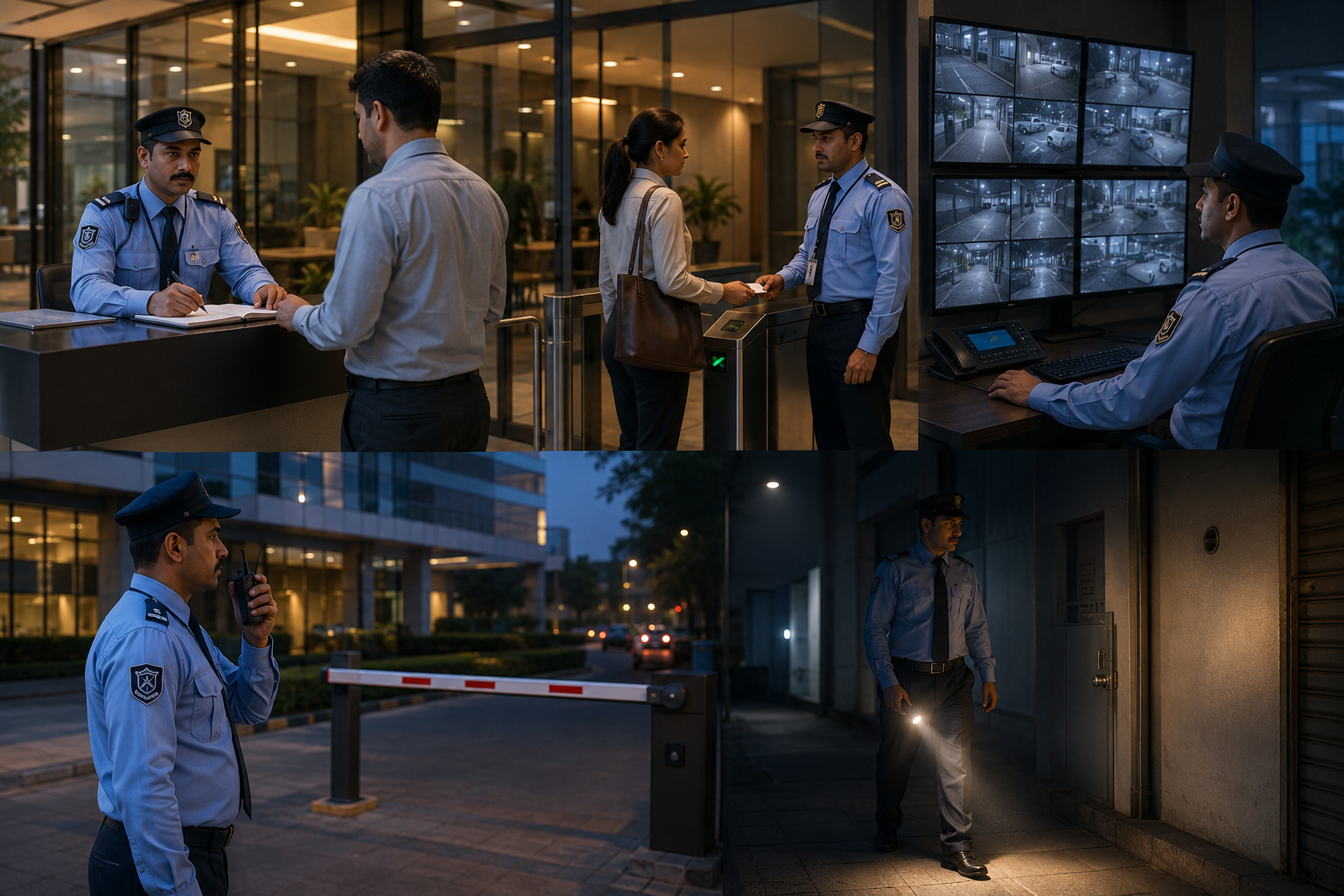
Bank security services play a key role in monitoring these points. Their responsibilities can include observing movement, supporting access procedures, identifying unusual activity, maintaining orderly customer flow, and communicating concerns to bank management.
However, effective entrance monitoring is not about stopping every person who enters. Instead, it is about maintaining awareness while allowing legitimate customers, employees, and visitors to move through the branch efficiently.
Why Branch Entry Points Need Continuous Monitoring
The main entrance is where the public interacts directly with the bank. During busy hours, several customers may enter and leave within a short period.
Consequently, security personnel need to remain attentive without creating unnecessary delays.
A monitored entrance can help security personnel notice:
- Unusual activity
- Unauthorised access attempts
- Suspicious objects
- Disturbances
- Unusual crowding
- Attempts to enter restricted areas
At the same time, security guards can assist customers with basic directions when appropriate.
Therefore, entrance security serves both a protective and an organisational purpose. These responsibilities form part of effective bank security, which helps branches manage risks and maintain a safe environment.
Understanding Different Types of People Entering a Bank
Not everyone entering a branch has the same purpose. Customers, employees, contractors, delivery personnel, and visitors may all have different access requirements.
For example, a customer may only need access to public banking areas, whereas a maintenance worker may need access to a specific service area.
Because of these differences, security personnel can work according to the branch’s access procedures.
This allows them to distinguish between normal public movement and activity that may require additional verification or management attention.
Monitoring the Main Customer Entrance
The customer entrance is usually the most active access point in a branch. Security personnel can observe movement while ensuring that customers are able to enter and exit normally.
During busy periods, they may also help maintain orderly movement near the doorway.
For instance, if a large number of customers arrive simultaneously, keeping the entrance area clear can make movement easier for everyone.
Furthermore, security personnel can remain alert to unusual behaviour without unnecessarily interfering with normal customer activity. Similar attention to customer activity and merchandise helps support effective retail security planning.
Supporting Controlled Access to Staff Entrances
Staff entrances are different from public entrances. They are generally intended for employees and authorised personnel.
Therefore, security monitoring at these points can help prevent unauthorised movement into employee-only areas.
Depending on the bank’s procedures, security personnel may monitor employee access, observe service personnel, and report unusual attempts to enter restricted sections.
This is particularly relevant during early morning and late evening hours when fewer employees may be moving through the building.
Monitoring Deliveries and Service Personnel
Banks regularly receive supplies, documents, equipment, maintenance services, and other deliveries. These activities can involve people who do not normally work inside the branch.
As a result, delivery and service access should be managed according to the bank’s established procedures.
Security personnel can direct authorised service personnel toward appropriate areas and alert management when access does not match the expected activity.
Moreover, keeping service movement organised can reduce unnecessary interaction between delivery activity and customer areas.
Entry Monitoring During Busy Customer Periods
Customer traffic may vary considerably during the day. At certain times, branches may experience queues or increased movement.
During these periods, security personnel may have to pay greater attention to the entrance and surrounding public areas.
They can help maintain clear pathways and observe activity around the queue.
Additionally, a visible security presence can provide customers with a clear point of contact if they experience a security-related concern.
However, the objective remains orderly movement rather than unnecessary intervention.
Exit Monitoring and Unusual Movement
Security awareness should not stop once a person leaves the branch. Exit areas can also provide useful information about movement around the property.
For example, security personnel may observe whether people are leaving normally or whether there is an unusual disturbance near the entrance.
They can also monitor the immediate exterior area for unusual activity, depending on the property’s security procedures.
This broader observation is important because security concerns may occur just outside the branch rather than inside it.
Monitoring the Area Around the Entrance
The area immediately surrounding a bank entrance can be just as relevant as the doorway itself. Sidewalks, parking spaces, nearby vehicles, ATM areas, and other external spaces may all experience activity connected to the branch.
Therefore, security personnel may need to observe the wider entrance environment.
This can include noticing:
- Unusual vehicle activity
- People repeatedly loitering near the entrance
- Unattended objects
- Crowding
- Blocked access routes
- Activity near ATM areas
Again, observation should be based on established security procedures and observable behaviour.
Supporting ATM Access Near Branch Entrances
Many bank branches have ATMs located near or within the entrance area. These may remain accessible outside normal branch hours.
Consequently, the security situation can change significantly after the branch closes.
Security personnel can monitor the ATM surroundings and remain alert to unusual activity, particularly during quieter hours.
If the ATM area is physically connected to the branch, appropriate access controls can also help separate customer areas from restricted internal sections.
Monitoring Access During Opening Procedures
The period immediately before a branch opens can have different security requirements. Employees may arrive, cleaning or maintenance personnel may enter, and systems may need to be prepared before customers are admitted.
Security personnel can monitor movement during this period according to the bank’s opening procedures.
This can help ensure that customer access begins only when the branch is ready to operate.
Furthermore, security awareness during opening can help identify unusual conditions before customer traffic increases.
Monitoring Access During Closing Procedures
Closing time also requires careful coordination. Customers may still be leaving while employees complete administrative activities.
Therefore, security personnel can remain attentive to movement around the main entrance and staff areas.
Once customer operations end, access requirements may change. Security personnel can follow management instructions regarding staff movement, service access, and after-hours monitoring.
This transition is important because a branch does not necessarily become empty immediately after customer-facing operations stop.
Identifying Unusual Activity Without Making Assumptions
Security personnel need to distinguish between normal activity and behaviour that genuinely requires attention. Importantly, appearance alone should not determine whether someone is considered suspicious.
Instead, guards should focus on observable actions and established security procedures.
For example, repeated attempts to enter a restricted area or unexplained efforts to bypass an access procedure may require attention.
On the other hand, ordinary customer behaviour should not be treated as suspicious simply because someone appears unfamiliar.
This balanced approach supports both security and respectful customer service.
Coordinating With Bank Employees
Security personnel do not operate independently from the bank. Effective branch security depends on communication between guards, managers, reception staff, and other employees. Similar coordination is important in industrial environments, where industrial security helps address site-specific risks.
If a security concern develops, the guard can notify the appropriate bank representative.
Similarly, employees can communicate relevant information to the security team. For example, a scheduled maintenance visit, delivery, or temporary access restriction can be communicated in advance.
As a result, security personnel have better information when monitoring the branch.
Responding to Emergencies at Entry and Exit Points
Entrances and exits can become particularly important during emergencies. A medical incident, fire alarm, disturbance, power failure, or other unexpected event may affect normal movement.
Security personnel can follow the branch’s emergency procedures and help keep access routes clear.
If emergency responders need to enter the building, security personnel can assist with access according to the established response plan.
Moreover, keeping entrances and exits organised can help prevent unnecessary congestion during an emergency.
Recording Security Incidents
When an incident occurs around an entrance or exit, appropriate documentation can help the bank review what happened.
A security report may record:
- The date and time
- Location
- Nature of the incident
- Relevant observations
- Actions taken
- Personnel informed
- Further action required
These records can also help management identify recurring concerns.
For instance, repeated incidents at a particular access point may indicate that procedures or staffing arrangements need to be reviewed.
The Importance of Shift Handover
Banks may require security coverage across multiple shifts. Consequently, communication between outgoing and incoming guards is important.
A proper handover can include information about:
- Recent incidents
- Expected visitors
- Maintenance activity
- Access restrictions
- Unusual observations
- Instructions from management
This ensures that the next security team begins its shift with relevant information rather than having to discover it independently.
Using Security Technology Alongside Physical Monitoring
Many banking facilities use CCTV, alarms, access-control systems, and other technologies. These systems can support physical security personnel by providing additional information, combining technology with effective bank security measures helps protect assets and maintain customer confidence.
For example, CCTV may help security teams monitor areas that are not directly visible from the entrance.
However, technology does not eliminate the need for physical security. A trained security professional can observe the physical environment, communicate with people on-site, and respond according to established procedures.
Therefore, combining physical presence with appropriate technology can create a more coordinated security environment.
Protecting Customer Experience
Bank security should support customers rather than make routine banking unnecessarily difficult.
Security personnel can maintain a professional presence, provide basic assistance, and communicate calmly when an issue arises.
During busy periods, this becomes particularly important. Customers may already be waiting for services, so unnecessary interruptions can create frustration.
By maintaining organised movement and applying procedures consistently, security personnel can support both safety and customer convenience.
Why Entry and Exit Monitoring Matters Beyond the Door
Entrance security is sometimes viewed as a simple task, but it involves much more than watching a doorway. Security personnel need to understand the activity taking place around the entrance and how that activity changes throughout the day.
Morning opening procedures, peak customer hours, deliveries, ATM access, staff movement, closing procedures, and overnight activity can all require different levels of attention.
Therefore, monitoring entry and exit points is an ongoing responsibility rather than a single daily task.
Conclusion
Bank security services play an important role in monitoring branch entry and exit points. From observing customer movement to supporting staff access, monitoring service personnel, watching ATM areas, assisting during emergencies, and documenting incidents, security personnel contribute to the overall physical security of a banking facility.
Moreover, effective entrance monitoring requires consistency, communication, professional conduct, and awareness of changing activity throughout the day.
Om Sai Safeguard Services provides bank security solutions for private and public sector banking institutions and describes its bank security offering as covering the security requirements of banking facilities. Its broader security portfolio also includes commercial, corporate, industrial, hotel, residential, and event security services. With trained personnel and structured security operations, Om Sai Safeguard Services can support banks in maintaining controlled entry and exit points while helping create a secure environment for customers, employees, and property.